The right plant in the right place
What makes a great aged care garden?
It’s not just colourful flowers or shady trees. Behind every outdoor space at Regis are decisions about safety, accessibility and creating a place that feels like home.
According to Regis Landscaping and Grounds Manager Mark Bradley, every tree, plant and pathway should have a purpose.
“For many residents, moving into aged care means leaving behind a garden they’ve cared for and enjoyed for decades,” Mark said.
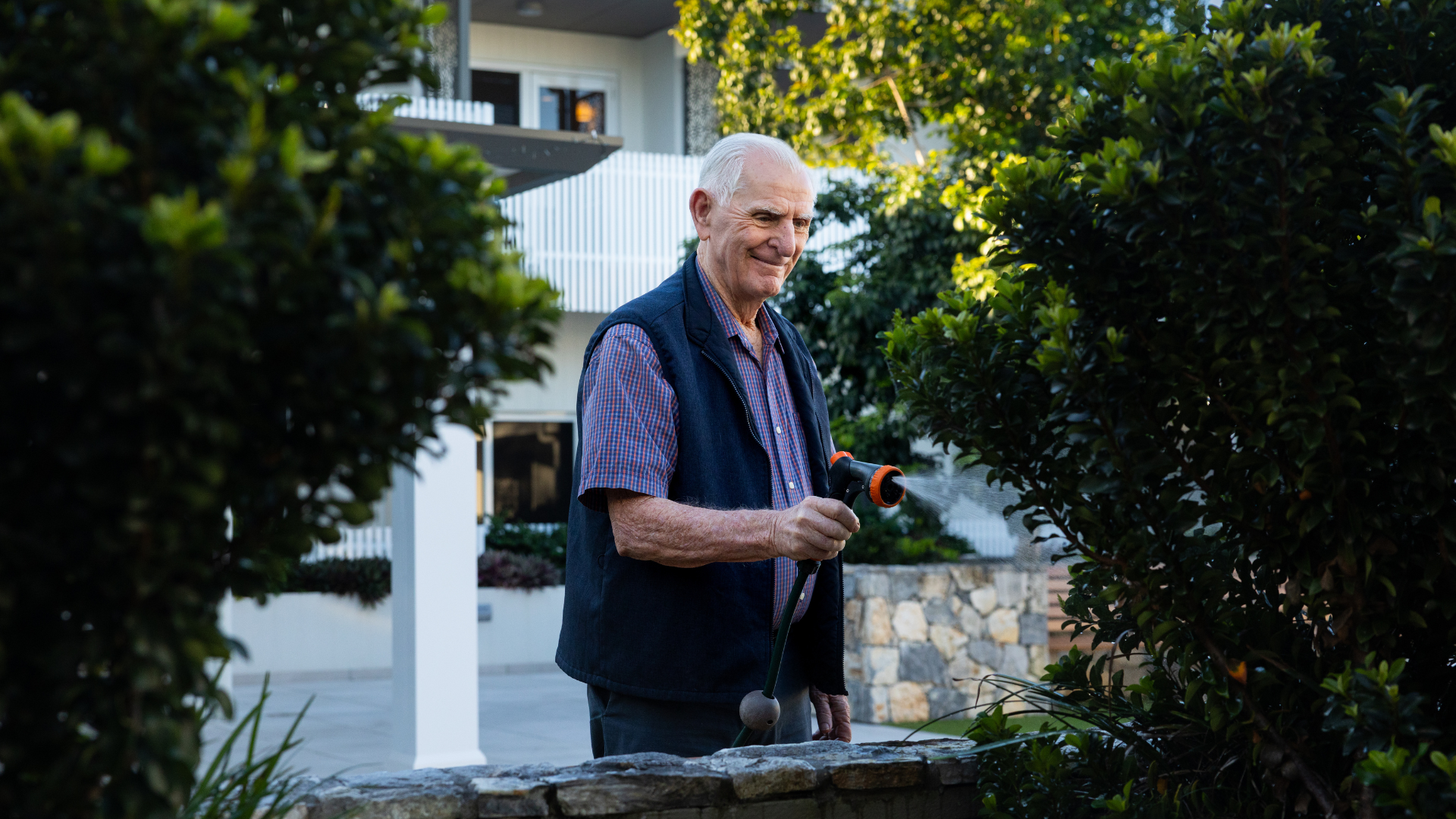
“Having gardens that feel familiar helps create a connection to home. It’s somewhere residents can sit in the sunshine, enjoy the fresh air, watch the wildlife or simply enjoy being outdoors.”
Thinking years ahead
While gardens should look beautiful, Mark says choosing the right plants is about much more than appearance.
“The biggest issue we see is the wrong plant in the wrong place,” Mark said.
“A tree or plant might look great today, but if it outgrows the space, damages pathways or buildings, creates ongoing maintenance issues or becomes a safety risk, it wasn’t the right choice.
“When we’re selecting plants, we’re thinking five, 10, 15 or even 20 years ahead. We want gardens that last longer, need less maintenance but still look really good.”
Plant selection is tailored to each Home, taking into account not only the local climate, but also the style and feel of the environment. A tropical Home in North Queensland will suit different planting to a suburban Home in a regional community or a new multi-story Home in a metropolitan setting.
“We’re looking for plants that suit the environment, provide colour and interest throughout the year, and don’t create unnecessary maintenance or safety issues,” Mark said.
“We also avoid trees that may damage buildings or pathways as they mature, or plants that create trip hazards through excessive leaf or seed drop.”
Mark also considers the people who will use the space every day.
“We often include plants that residents are likely to recognise from their own gardens,” he said.
“Colour, fragrance and texture all help create outdoor spaces that people enjoy spending time in, particularly for residents living with dementia.”
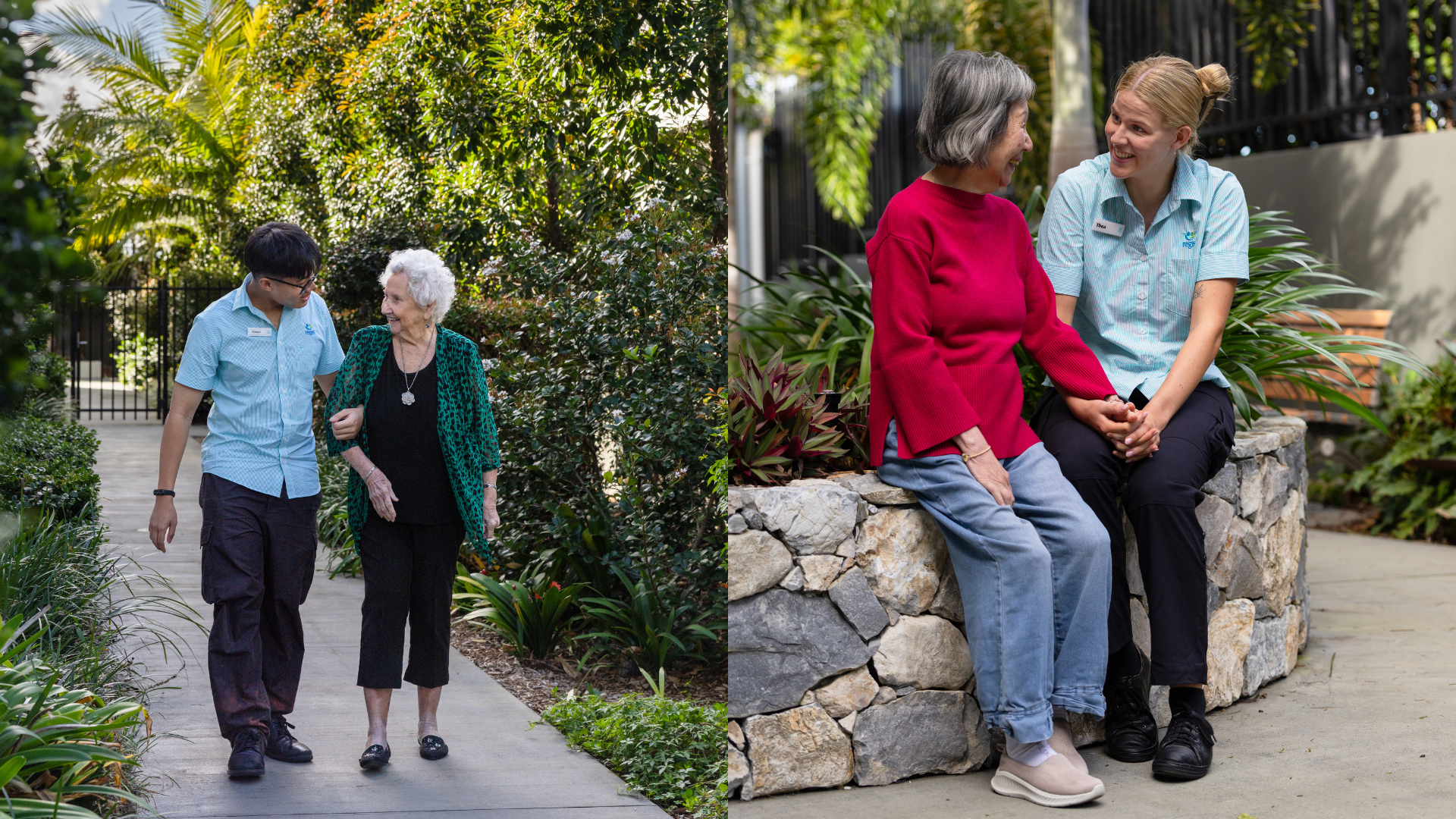
Designing gardens people can use
For Mark, a successful garden isn’t just one that looks good, it’s one that residents feel confident using.
“When I walk into a Home, I look down, I look straight ahead and then I look up,” he said.
“I’m looking for trip hazards, how residents move through the space and whether there are branches or trees that could become a safety risk.
“That’s why the design of the garden is just as important as the plants themselves. Accessible pathways, shade and continuous walking loops, particularly in dementia communities, all encourage residents to spend more time outdoors.
“When outdoor spaces are safe, comfortable and easy to access, they’re much more likely to be used. Our gardens should be full of people.”